SYDNEY — For over a century, the Great Australian Dream was underpinned by a quiet assumption: that local communities, through their elected councils, had the final say over what happened in their own backyards. However, a historical analysis of Australia’s planning landscape reveals a different reality—one of a progressive and ruthless centralisation of power that has effectively relegated local councils to the role of administrative rubber-stamps.
Historically, local government in Australia has always occupied a precarious legal position, existing only by the grace of state legislation rather than constitutional right. While the 1970s saw a brief, radical flourish of community defiance through the "Green Ban" movement—most famously saving Kelly's Bush and The Rocks from high-rise destruction—the state eventually fought back with the law. Today, that counter-revolution is complete, manifest in the "State Significant Development" (SSD) pathway—a legal mechanism that allows the government to bypass local planning controls entirely in the name of "productivity" and "state interests".
Mona Vale: The New Battleground
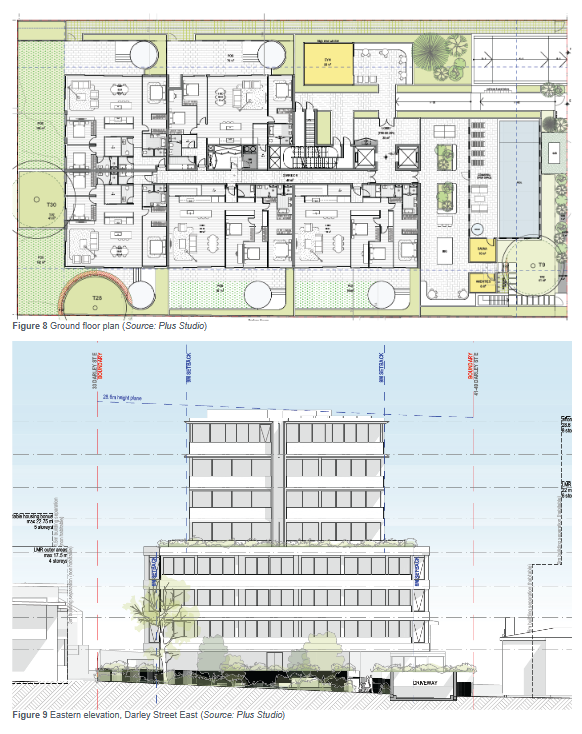
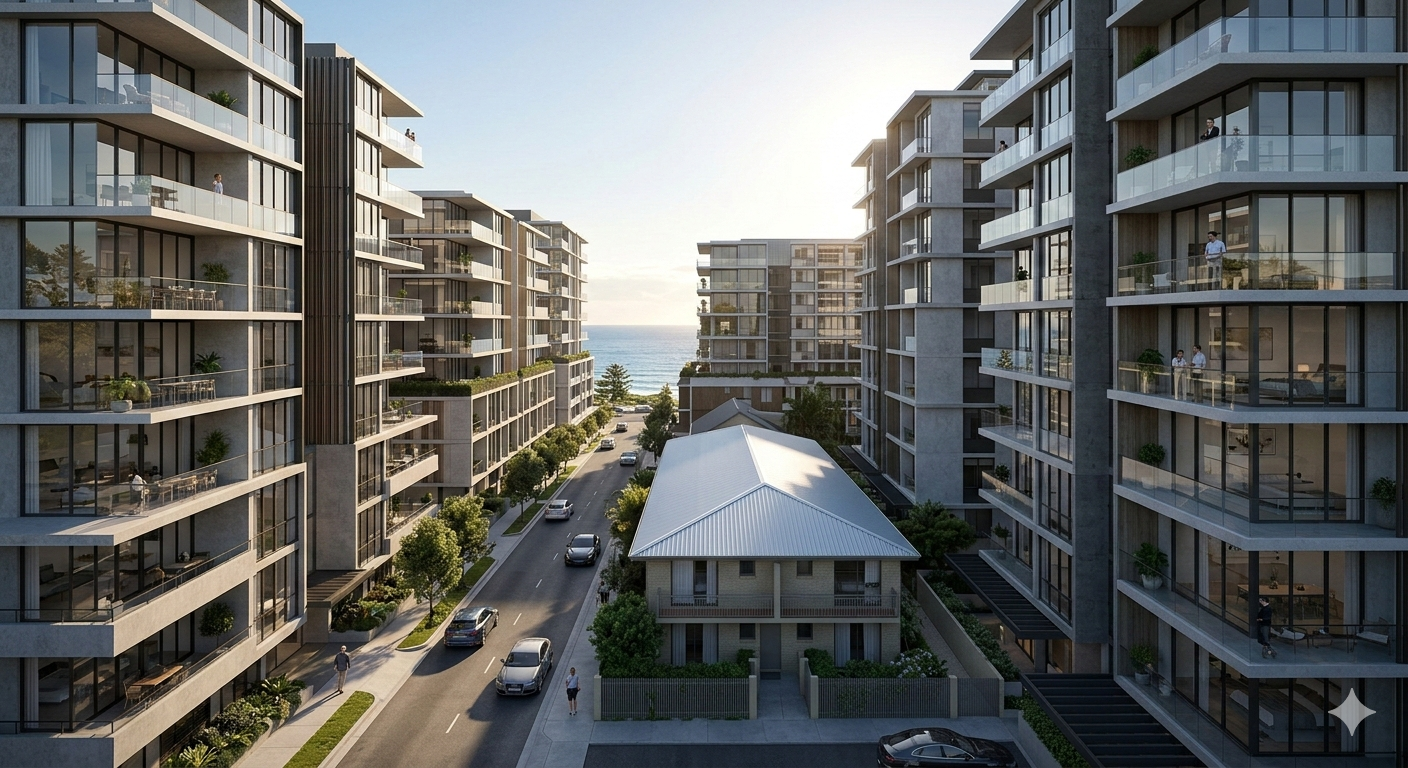
The current flashpoint for this struggle is the quiet cul-de-sac of Darley Street West in Mona Vale. Here, the theory of state-led displacement has become a concrete reality. A State Significant Development Application (SSD) has been lodged for 159-167 Darley Street West, proposing three six-storey towers housing 81 apartments.
Under the Northern Beaches Council's (NBC) existing Pittwater Local Environment Plan, this development would normally be refused, as it more than doubles the current two-storey height limits for the area. However, because the project has a capital investment value exceeding $60 million and includes a 10 per cent affordable housing component, the developer has been able to "opt-in" to a state-led assessment. This effectively strips the NBC of its status as the consent authority, leaving the local community to deal with a state bureaucracy that many feel is "developer-led".
A Bellwether for Blanket Rezoning
Residents have formed a new action group, SOS (Save Our Suburb) Mona Vale, viewing the Darley Street proposal as a "bellwether" test case for the wider Stage 2 Low and Mid-Rise Housing Reforms that came into effect in February 2025. These reforms mandate increased density within 800 metres of nine key Northern Beaches town centres, including Mona Vale.
The struggle in Mona Vale mirrors the historical patterns identified in the broader Australian context:
- Infrastructure Gaps: Residents and local MPs argue that the state is "building and hoping for the best," with no immediate plans to fix the "bus crisis" or the constrained Pittwater Road-Darley Street intersection, which already struggles under current loads.
- Environmental Hazards: The Darley Street site is situated on a reclaimed floodplain with an underground creek. Objectors fear that the proposed massive underground parking will act as a "concrete dam," exacerbating local flooding—a concern they feel is being ignored by top-down planners.
- The Affordable Housing Fallacy: Critics claim that developers are using the minimal "affordable housing" uplift as a Trojan horse to secure premium views and height that would never be permitted under local character guidelines.
The Atrophy of Local Voice
Perhaps the most stinging grievance for the Pittwater community is the perceived erosion of democracy. While a developer may take a year to prepare an SSD proposal, the local community is often granted as little as 14 to 28 days to submit their views. This asymmetry of power is a direct legacy of the legislative shifts that began in 1979, designed to insulate major projects from "nimbyism" and local appeal rights.
As state governments chase ambitious housing targets—such as the 1.2 million homes mandated by the National Housing Accord—Mona Vale has become a symbol of what many see as the "architecture of displacement". For the residents of Darley Street West, the struggle is no longer just about three buildings; it is a fight to determine whether a community has the right to shape its own future, or if the "local wish" is a relic of a bygone era.
"They've sidelined council and haven't come near the community to listen or explain," says a spokesperson for SOS Mona Vale. In the modern Australian planning system, it seems the state's "battering ram" of rezoning is now firmly held by the Minister, and the gate is under assault.